Half-Day Coffee Tour: From the Seed to the Cup, Farm & roastery
Max 15Hotel pickup
From $86 per person
Every farm morning around Medellin follows the same sequence, and knowing it in advance is the difference between watching a process and understanding one. The tree takes three years to fruit. The cherry has to be off the bean within hours of picking. And the choice a farmer makes about a fermentation tank does more to your cup than the roast does. Here is each station, in the order a coffee plantation tour Medellin walks you through them.
| Station | How long it takes | What it decides |
|---|---|---|
| Nursery | 6–8 months, then 3 years to fruit | The variety |
| Picking | Several passes over a season | Ripeness, and therefore sweetness |
| De-pulping | The same day | Whether the fruit ferments on the bean |
| Fermentation | 12–36 hours | Washed, honey or natural |
| Drying | 1–3 weeks | Stability, and whether the lot survives |
| Trilla (milling) | Minutes | Green coffee, ready to ship |
| Roasting | 8–14 minutes | Most of what you smell |
| Cupping | 10 minutes | The score, and the price |
A coffee plant is grown from seed in a shaded bed for six to eight months before it goes into the ground, and it will not fruit for another three years. Most farms here start you at the seedbed for that reason: it sets the timescale for everything that follows. On two of these tours you plant one yourself and it is labelled with your name.
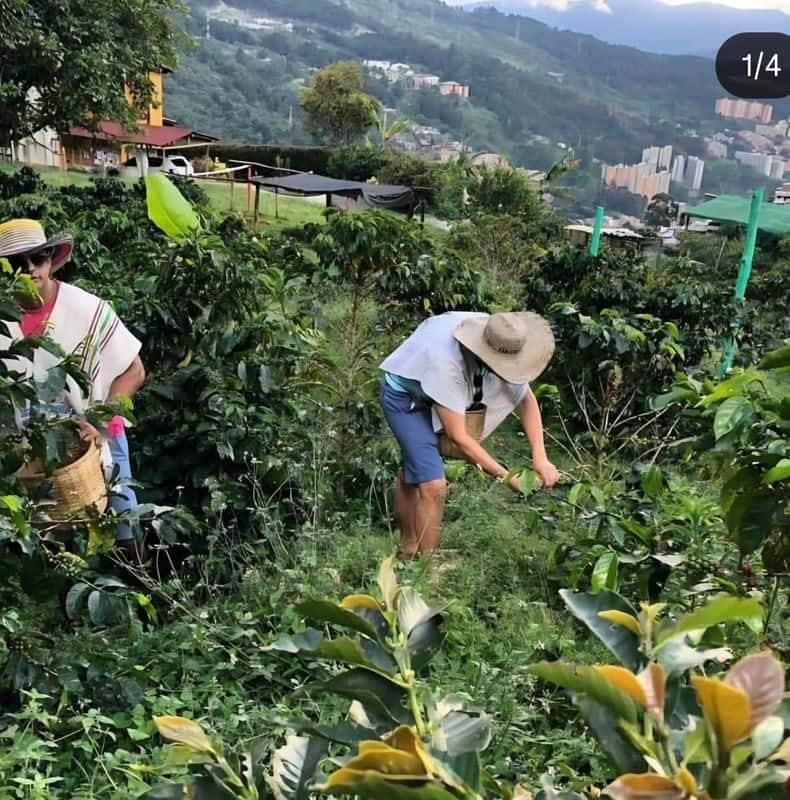
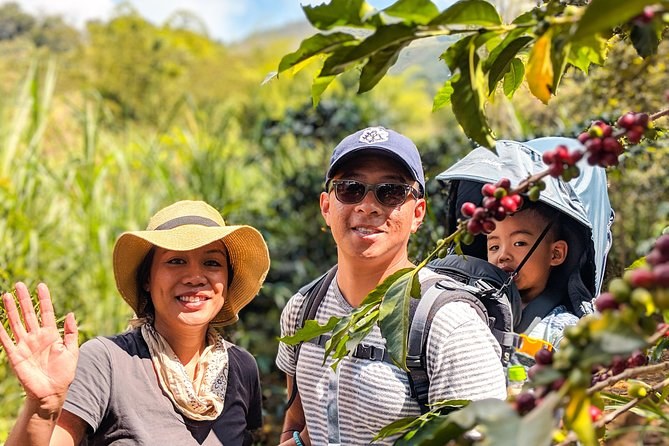
Coffee on an Antioquia hillside ripens unevenly, so the same branch will carry green, yellow and deep red cherries at once. A picker takes only the red ones and comes back to the same tree several times in a season. You will be given a basket on a belt, shown what ripe looks like, and left to work a row; nobody expects you to fill it.
The cherry has to come off the bean the same day or the fruit starts to ferment on its own. A hand-cranked or motorised de-pulper squeezes the skin and most of the flesh away and leaves the bean in a sticky layer called mucilage. Several farms hand you the crank; one of them serves the mucilage back to you as a frappé.
The beans sit in a tank for twelve to thirty-six hours while what is left of the fruit breaks down. How long that runs, and whether the mucilage is washed off, left partly on or left entirely on, is the difference between a washed, a honey and a natural coffee. It is the single biggest decision a small farm makes about how its coffee will taste.
The beans are spread on raised beds or a concrete patio and turned by hand for one to three weeks until they hold about eleven per cent moisture. In the rainy months the beds go under plastic. This is the step that most often surprises visitors: it is slow, it is entirely weather-dependent, and it is why every farm here watches the forecast.
Dried beans keep a papery parchment layer that is milled away before roasting. On a small farm that is a threshing machine in a shed; commercially it is a mill in the city. What comes out is green coffee, and it is the form in which almost all of Colombia’s crop leaves the country.
Green coffee has no aroma to speak of. Eight to fourteen minutes in a drum takes it through the first crack and into the range you recognise. The farm tours roast a small batch over a fire or in a table-top drum; the roastery product puts you in front of a commercial machine and someone who does it for a living.
Ground coffee, hot water poured straight onto it, a crust broken with a spoon after four minutes, then slurped hard from the spoon so it sprays across the palate. It is not elegant and it is the standard method everywhere in the trade. Two of these tours run a proper cupping table; the rest pour you a good cup and talk you through it.
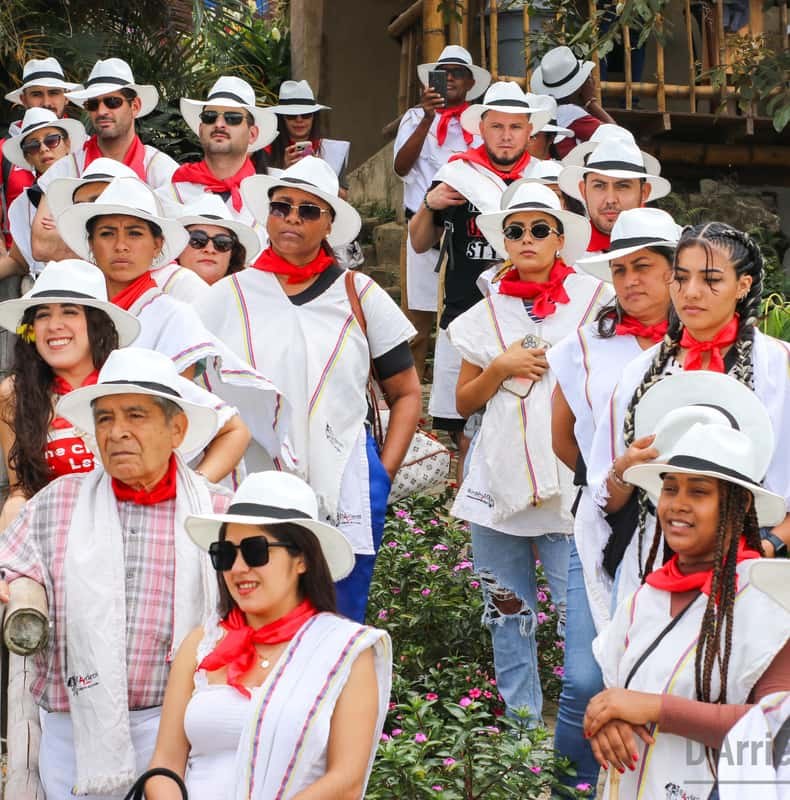
A poncho on four of these days and a hat on two, a picker’s certificate on three, a small bag of the farm’s own coffee on one, and on almost all of them the chance to buy more at the gate for less than a specialty bag costs in El Poblado.
They vary more than the listings suggest. The farm-and-roastery half day is the only one that follows a bean into a commercial roaster and onto a cupping table. The countryside days give you the whole growing and wet-processing side plus a paisa lunch. The Comuna 8 farm compresses all of it into three hours without leaving the city. The farms page says which is which.
Wet processing uses a great deal of water, and what a farm does with it afterwards is one of the quiet differences between a good finca and an indifferent one. The channel below the de-pulper carries pulp and mucilage away; on the better farms it goes into a composting bed and comes back as fertiliser for the same rows. Ask where it ends up and you will learn more about how the place is run than any brochure will tell you.
The same is true of the shade. Coffee is naturally an understorey plant, and farms that keep tall trees over the rows get slower ripening, cooler soil and a habitat that holds birds. Several of the fincas around Medellin are planted that way, and it is visible the moment you walk in: rows under canopy rather than rows in full sun.
Specialty coffee is graded on a hundred-point scale, and eighty is the line: above it a lot is specialty, below it is commercial. Most of what a farm here sends to the mill sits in the low eighties. The lots poured on a cupping table are usually the top of the crop, which is why the coffee you drink on a farm morning tastes better than the same farm's name on a supermarket shelf.
The score is set by a Q-grader, a licensed taster who has passed a set of sensory examinations. When a roastery here tells you a lot scored 85, somebody sat down with a bowl and a spoon and put that number on it. It is the closest thing coffee has to an objective measure, and it is the reason the cupping ritual looks the way it does.
A short list of questions gets you a better morning than any amount of reading. What variety is this? How long does the fermentation run? And what did this lot score? Guides on these farms answer all three happily, and the third one usually starts a longer conversation than you expected.
The sequence reads well and walks better. Medellin Coffee Tours lists the farm days that cover it end to end, from a three-hour city farm to a five-hour run that finishes in a roastery, all with free cancellation at 24 hours.
From $86 per person