The Best Time for a Medellin Coffee Tour
Short answer. October and November for a full basket, May for a quieter version of the same thing, January and February for dry ground and easy walking. The tours run every day of the year and the temperature barely moves; what changes is whether there is anything ripe to pick.
Two things move through the Medellin year and they do not line up with each other. Antioquia harvests twice, and the city rains twice, and the overlap is what makes this question harder than it looks. This guide sorts it out: which months give you real picking, which give you dry trails, and which weeks to avoid booking late. coffee farm tour Medellin run every day of the year regardless.
When is the coffee harvest in Antioquia?
Twice a year. The main crop — the cosecha principal — runs September to December, peaking through November. The mitaca, the smaller second crop, six months out from the main one, and the word every farm here uses for it, runs March or April to June. Between them they give Antioquia something to pick for roughly seven months of the twelve.
The main harvest is much the larger of the two. In November the rows are heavy, the de-pulpers run daily and the drying beds turn over constantly, which is the farm working at full tilt rather than demonstrating.
Does it matter if you miss the harvest?
Less than you would think. Everything else on a farm morning runs identically all year: the nursery, the de-pulper, the fermentation tank, the drying beds, the mill, the roaster and the tasting. Two farms plant a coffee tree with your name on it instead of putting a basket in your hands.
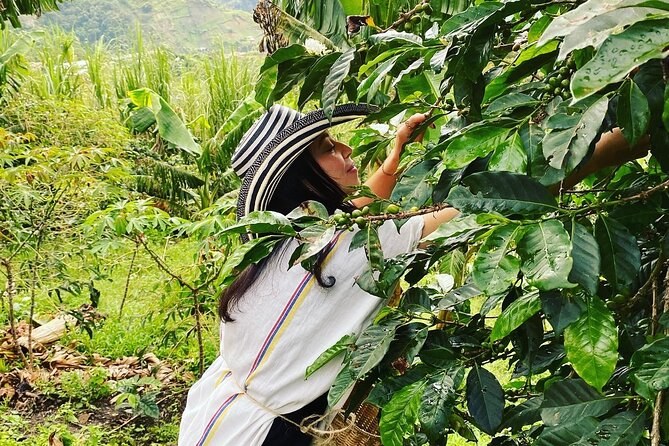
What you lose is the picking, which becomes a demonstration on a few late trees rather than a full basket. If that is the part you came for, aim for October, November or May. The harvest page goes month by month.
When does it rain, and does it matter?
Medellin has two rainy seasons, April to May and September to November, with October the wettest month and December to February the driest. Rain arrives as a sharp afternoon shower, usually between about 3pm and 6pm.
That timing is the whole answer. Every coffee tour here departs between 8am and 9:30am and finishes between one and three. You are back before the sky opens, which is why almost nothing gets cancelled and why the rainy months are not the problem people expect.
Did you know? The main harvest overlaps the second rainy season almost exactly, which is why drying is the step Antioquian farmers worry about most. Raised beds go under plastic in October and November, and you will see it.
What is the best month overall?
November, if you want the farm at its busiest and do not mind rain in the afternoon. Everything is happening at once: picking, de-pulping, drying beds turning, and the mills running.
February if you want easy walking and clear light, and are content to watch rather than pick. March is the quiet compromise: the mitaca starting on the lower farms, dry mornings, and none of the December-to-January crowding.
Which months are busiest?
December and January, when Colombians travel and the city fills for the alumbrados along the river. Then the ten days of the Feria de las Flores in the first half of August, when the silleteros come down from Santa Elena and everything above the city is busy with it.
Book those weeks further ahead than you would otherwise — the small-group products, capped at seven, eight and ten travellers, are the first to go.
What is the weather actually like?
Medellin sits at 1,495 metres, which is why it is called the city of eternal spring and why it holds around 22°C by day, all year. There is no cold season and no hot one. What varies is rainfall and cloud, not temperature.
On the farms above Santa Elena you are several hundred metres higher again and the mornings are genuinely cool. Take a layer for those; you will not need one in the valley.
What time of day is best?
Early, and every operator here already agrees. Pickers work from first light and the drying beds are turned in the morning, so an 8am or 9am departure puts you on the farm while it is working. It also gets you off the slope before the middle of the day.
Almost nothing here runs in the afternoon, and the one thing that does — the spa day above Santa Elena — is designed to be restful rather than busy.
Useful tip. If picking is the reason you are going, say so when you book and ask what is ripe that week. Farms know exactly, and it is the difference between a basket and a photograph. What to expect covers the rest of the day.
What does the coffee flowering look like?
White blossom over an entire hillside, smelling of jasmine, and gone in about forty-eight hours. It follows rain, which means it comes in bursts through the first rainy season and again in September, and no farm can predict it more than a few days out.
If you catch it you will have a plantation in flower, green fruit setting from the last flowering and a few late red cherries on the same branch. June is the likeliest month for that combination on the farms around Medellin, and it is the one thing on a farm tour nobody photographs enough.
Is there a low season for these tours?
Not in the way there is at a beach. The farms run every day of the year, the temperature does not move, and the shape of the morning is the same in February as in November. What changes is availability rather than the product.
The genuinely quiet months are March, June and September, which fall between the Colombian holiday periods. Those are the weeks when a small-group day can be booked two days out rather than two weeks, and when a farm has time to answer questions properly.
Month by month, at a glance
| Month | Picking | Rain | Verdict |
|---|---|---|---|
| January | Tail of the main crop | Dry | Good walking, busy city |
| February | Little | Dry | Best light, easiest ground |
| March | Mitaca starting | First rains late in the month | Quiet and good |
| April | Mitaca | First rainy season | Real picking, wet afternoons |
| May | Mitaca peak | Wettest of the first season | Full baskets, muddy rows |
| June | Mitaca ending | Easing | Flowers, green fruit and last cherries |
| July | Little | Dry | Clear valley views, busy |
| August | Little | Dry | Feria de las Flores; book early |
| September | Main crop starts high up | Second rainy season | Building |
| October | Main crop | Wettest month | Fullest farm, heaviest ground |
| November | Peak | Heavy, easing late | The best month to see it working |
| December | Finishing | Drying out | Post-harvest processing, busy city |
Does altitude change when a farm harvests?
Yes, and it is why two farms forty minutes apart can be picking in different weeks. Coffee ripens more slowly the higher it grows, so the fincas above Santa Elena run later than the ones out at Palmitas and Ebéjico. Across Antioquia as a whole that spread is what gives the department something to pick for most of the year.
In practice it means a farm's own answer beats a calendar. Ask when you book what is ripe that week; the family will know to within a few days.
What is the Feria de las Flores, and does it affect a coffee day?
Ten days in the first half of August when Medellin fills for its flower festival, and the silleteros walk down from Santa Elena carrying arrangements on their backs. It is the biggest event in the city's year.
For a coffee morning the effect is availability rather than weather. Two of these farms sit in Santa Elena, in the middle of silletero country, and everything books out further ahead than usual. If you are here in August, reserve the farm day before you reserve anything else. Things to do covers the festival itself.
When should you not come?
There is no bad month for the tour itself, which is worth saying plainly. If you have a choice, avoid the last two weeks of December and the first ten days of August for availability rather than weather, and avoid October if walking on wet earth is genuinely difficult for you.
Does the harvest change what you drink on the farm?
A little, and in a way worth knowing. During and just after a harvest the farms are pouring the current crop, freshly milled and roasted within weeks, and it tastes brighter and more acidic than the same lot will six months later. Out of season you are drinking last harvest's coffee, which has settled into something rounder and sweeter.
Neither is better and both are correct. It is the same difference a wine grower would describe, and asking a farm which crop you are tasting is a good way into a longer conversation. The tastings page covers the vocabulary.
How far ahead should you book, month by month?
Two to three days is enough for most of the year, and it is the small-group products that break that rule rather than the popular ones. The days capped at seven, eight and ten travellers go first in every busy period.
| Period | Book ahead | Why |
|---|---|---|
| March, June, September | Two days | The quietest weeks of the year here |
| April, May, July | Three to four days | Steady, nothing unusual |
| October, November | Four to five days | Harvest, and the best month to see it |
| First half of August | Two weeks | Feria de las Flores fills the city |
| Mid-December to mid-January | Two weeks | Colombian holidays and the alumbrados |
Book the month that suits what you want
Picking, dry ground or quiet: pick one and the month follows. Medellin Coffee Tours lists every farm day running from the city, and free cancellation at 24 hours means a change of plan costs nothing.
Farm days that run all year
Coffee and Flavors of Antioquia Sightseeing Tour ☕ (Real Farm Experience)
LunchTasting
From $88 per person