Medellin Coffee Farms Without a Tour
Short answer. Two of these farms you can reach on a Cívica card and a phone call: the Comuna 8 finca and the Santa Elena farms above Parque Arví. The countryside fincas you cannot, because they sit up unpaved veredal roads with no bus. Doing it yourself saves the guide, not the fare.
This guide exists because the honest answer is not always "book a tour". Some of the coffee around Medellin is genuinely reachable on public transport, and if that is the trip you want you should have it. What follows is which farms you can get to alone, what it costs, what it takes, and where a booked departure is still the better buy. coffee tours from Medellin are the alternative wherever it makes sense.
Can you visit a Medellin coffee farm independently?
Sometimes. These are private smallholdings, not visitor attractions with a gate and a ticket desk, so "visiting independently" means arranging it with the family who own it. Two of them sit on the city's transport network and take walk-up or phoned bookings; the rest work only through the operators who bring them groups.
The distinction is practical rather than commercial. A finca forty-five minutes up a veredal road with no bus route cannot receive independent visitors, because there is no way for them to arrive.
What does the metro route actually cost?
Very little, which is the point. A single ride costs about COP 3,430 with a personalised Cívica card and COP 3,900 without one, and the trams and the Metrocable lines are inside the same fare. The one exception is Line L up to Arví, which is a separate ticket at about COP 13,700.
| Leg | Cost | Time |
|---|---|---|
| Line A to San Antonio | One metro fare | 10–25 min |
| Ayacucho tram and cable H | Same fare, no exit | 25–40 min |
| Line A to Acevedo, cable K | Same fare, no exit | 30–45 min |
| Cable L to Parque Arví | about COP 13,700 | 15–25 min |
| Chiva bus, Arví to a farm | Paid on the day | 20–30 min |
| Guided tour, all in | From $55 | 4–4.5 hrs |
Add it up and a self-made trip to Santa Elena costs about a third of the cheapest guided day. What it does not include is the farm visit itself, which you still have to arrange.
Did you know? Line L to Parque Arví is the only part of Medellin's network with its own separate fare, and it is priced as a tourist line rather than as transport. Residents in the lower socio-economic brackets pay considerably less.
Which farms can you reach on your own?
- Casa Finca de La Sierra, Comuna 8. Tram and cable from San Antonio. The farm is a family home in a residential neighbourhood, and going in with someone who lives there is what makes the visit work.
- Don Leandro, Santa Elena. Metro, two cables and a chiva bus. The last stretch is unpaved and the bus is the only thing that runs it.
- The Parque Arví area generally. The reserve itself is open to anyone, with marked trails and a weekend market, whether or not you visit a farm.
Everything else on the farms page — Palmitas, Ebéjico, Copacabana, Sabaneta, Jardín — needs a vehicle.
What about renting a car?
Possible, and rarely worth it for one morning. Medellin traffic is heavy, the veredal roads out to the fincas are unpaved and unsigned, and parking at a smallholding is somebody's yard. The drive itself is not difficult; finding the place is.
If you are already renting for a longer Antioquia trip, the calculation changes. Otherwise the private half-day costs about what a day's rental plus fuel does, and comes with somebody who knows the turning.
Could you just go to a café instead?
Genuinely, yes, and for some travellers that is the right answer. Medellin has one of the densest specialty coffee scenes in the country in Laureles, Provenza and El Poblado, and a good bar will pour you three processes side by side for the price of a sandwich.
What a café cannot show you is the fermentation tank, the drying beds or the slope the rows are cut into, and those are the parts that change how you think about the cup. The tastings page covers both sides of that.
What does a guided departure actually buy you?
Four things, in order of value. Access to a farm that does not otherwise receive visitors. Transport up a road you would not find. Somebody who can explain a fermentation tank in your own language. And a meal, on most of the countryside days.
It is worth being clear that you are not buying skip-the-line access or a ticket, because neither exists here. You are buying the ability to get there and be shown round.
Useful tip. If you want the independent version, go up to Parque Arví on the cable and walk the reserve, then book a farm morning separately for another day. The two experiences are different and the reserve is worth its own visit — things to do has the detail.
What can you see from the cable cars without booking anything?
A great deal, and it is the best value in the city. Line K from Acevedo climbs over Santo Domingo and gives you the whole northern half of the valley; Line L carries on into cloud forest to Parque Arví. The Ayacucho tram plus cable H does the same on the eastern side, over Comuna 8 and the neighbourhood the coffee farm sits in.
All of that is ordinary public transport at ordinary fares, apart from the Arví leg. If your interest is really the view rather than the coffee, ride the cables and spend the difference on lunch.
Can you buy the same coffee without going?
Some of it. Several of these farms sell online and at markets in the city, and the roastery on the farm-and-roastery half day supplies cafés across Medellin. You can drink a lot of what you would have picked without leaving Provenza.
What that misses is the reason the tour exists. The interesting part of a coffee farm is not the cup at the end; it is the fermentation tank, the drying beds and the slope the rows are cut into. The seed-to-cup page is the argument for going.
Is the independent route safe?
The metro, the trams and the cables are the safest and best-run transport in Colombia, and the reserve at the top is a public park. Comuna 8 is a residential neighbourhood where the coffee tours are run by people who live there, and going in with one of them is both the easier and the better-mannered way to do it.
Ordinary city sense applies: go in daylight, keep your phone away on the street, and use the cable rather than a taxi up the hill.
What does a chiva bus cost, and can you just take one?
The chiva — an open-sided painted bus — is genuine rural transport in Antioquia as well as a tourist novelty, and it is what covers the last unpaved stretch from Parque Arví out to the farms above Santa Elena. Fares on the local runs are a couple of dollars, paid in cash to the driver.
Taking one independently is possible and the timetable is informal. You will be sharing with people going home with shopping, which is the best part of it, and you will need to know where to get off, which is the hard part. The barista workshop includes the round trip in its fare precisely because that last leg defeats most visitors.
How much Spanish do you need to go alone?
Enough to arrange a visit by phone, which is more than most travellers have. The metro, the trams and the cables are all signed and simple, and you could reach Parque Arví or Comuna 8 with no Spanish at all. Making an appointment at a smallholding is a different conversation.
The guided version removes that entirely. Most of these products list an English-speaking guide, several run bilingually, and two include a dedicated translator. The FAQ set covers which is which.
What does each route give up?
| Independent | Guided | |
|---|---|---|
| Cost | One or two metro fares | From $55 |
| Farms reachable | Two, both in the city | All ten |
| Explanation | Whatever you can read | A guide, in your language |
| Picking and processing | Only if the farm agrees | Built into the day |
| Lunch | Buy your own | Included on countryside days |
| Time | Half a day, mostly travelling | 4 to 6 hours, mostly on the farm |
| Cancellation | Nothing to cancel | Free at 24 hours |
What would you need to arrange yourself?
More than transport. A farm visit means somebody stopping work to walk you round, and on a smallholding that is a real cost to them. The families who receive independent visitors expect a call ahead, a rough time and an agreed fee, and the conversation happens in Spanish.
You would also be arranging the parts a tour hides: getting to the right vereda, finding the right gate, and knowing when the farm is picking rather than resting. None of that is impossible. It is simply the work the fare covers.
What about visiting a roastery in the city?
That one is genuinely open to anyone. Medellin's specialty roasteries run cupping sessions and short courses that you can book directly, and several of them roast lots from the same corregimientos the farm tours visit. It is a good half of the picture and a legitimately independent way to get it.
What it misses is the growing side entirely: the nursery, the rows, the de-pulper and the drying beds. The seed-to-cup page sets out how much of the chain happens before a bean ever reaches a roaster.
The honest recommendation
Go up the Arví cable independently, because the ride and the reserve are worth a morning on their own and cost almost nothing. Book a farm day separately, because the farms that will genuinely teach you something are the ones you cannot reach. That combination costs less than two guided days and gives you more.
Book the part you cannot do yourself
The transport you can arrange in ten minutes. The finca, the guide and the fermentation tank you cannot. Medellin Coffee Tours lists the farm days that handle all three, from $55, with free cancellation at 24 hours.
The farms you cannot reach alone
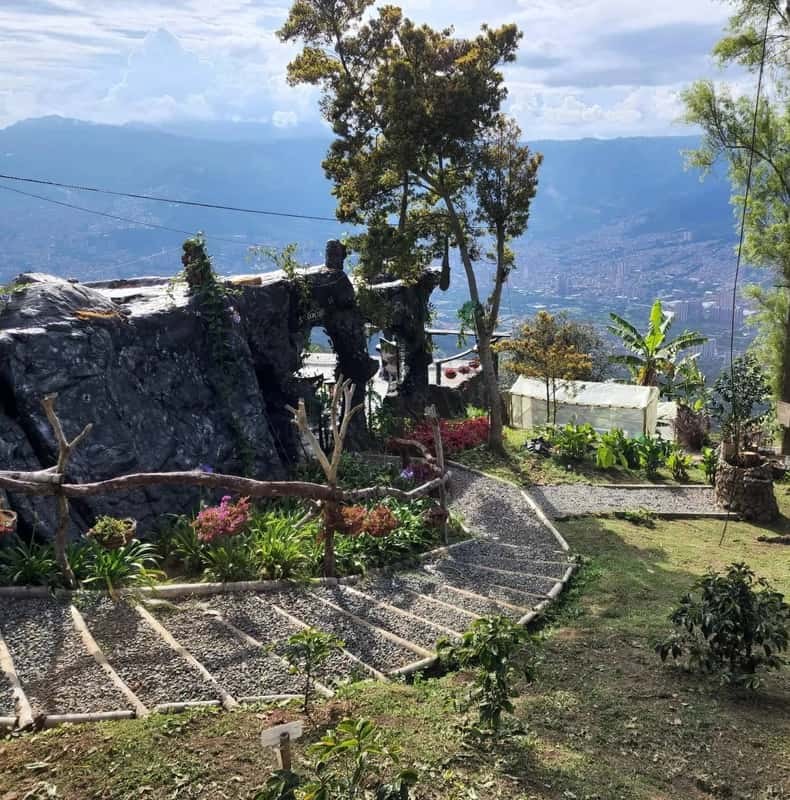
Medellin: Coffee Farm and Barista Workshop Experience Tour
Max 10Metro & cableTasting
From $57 per person